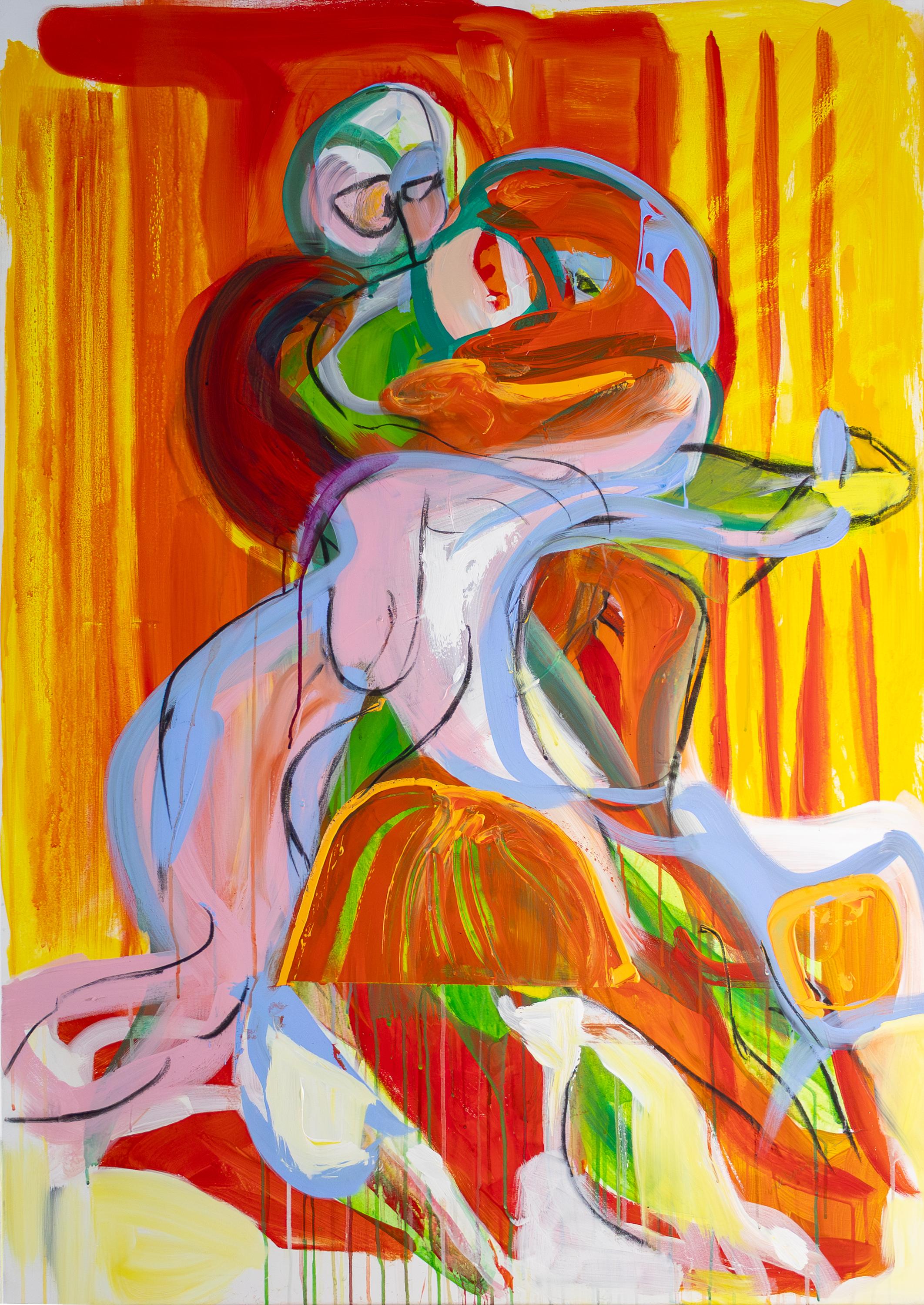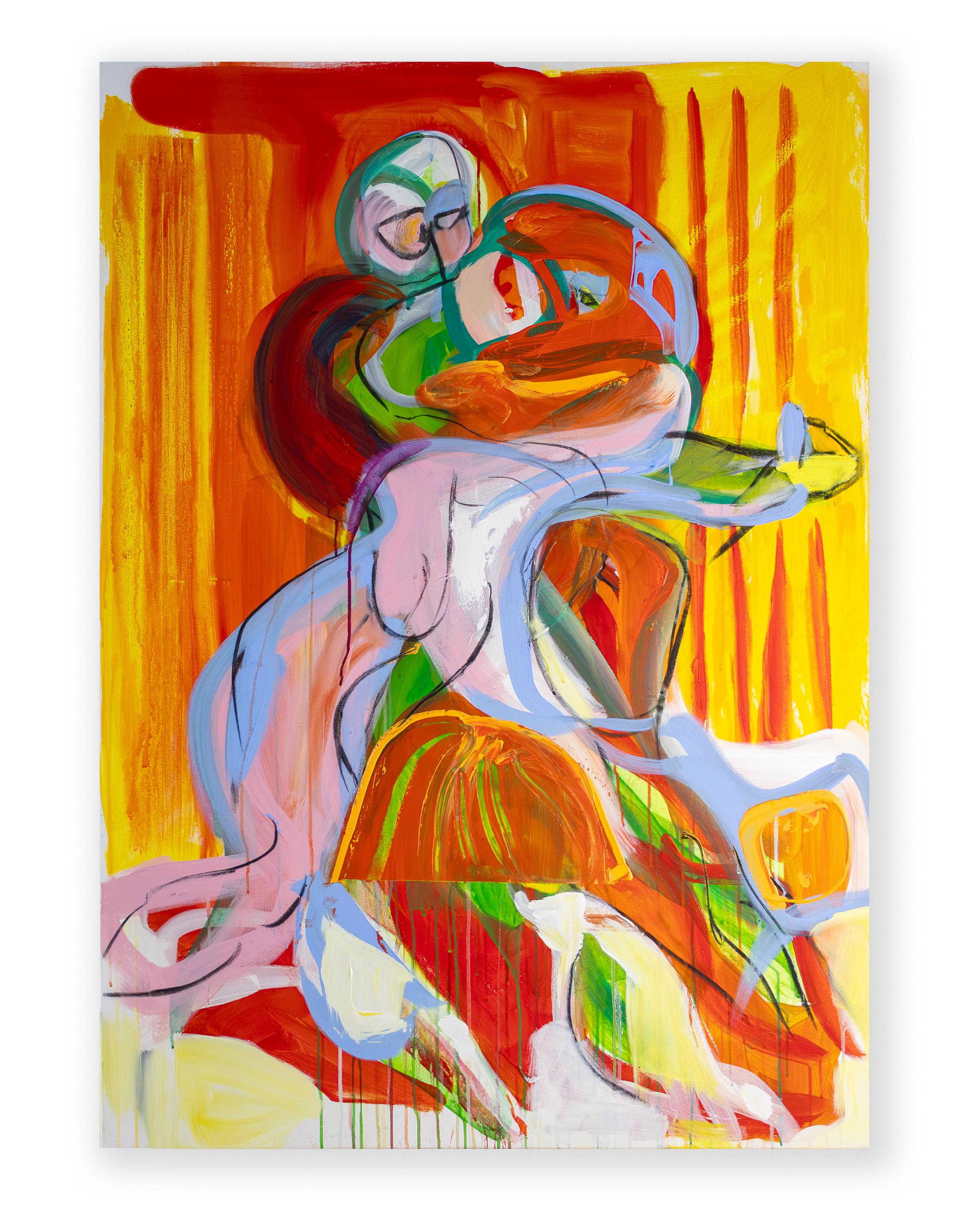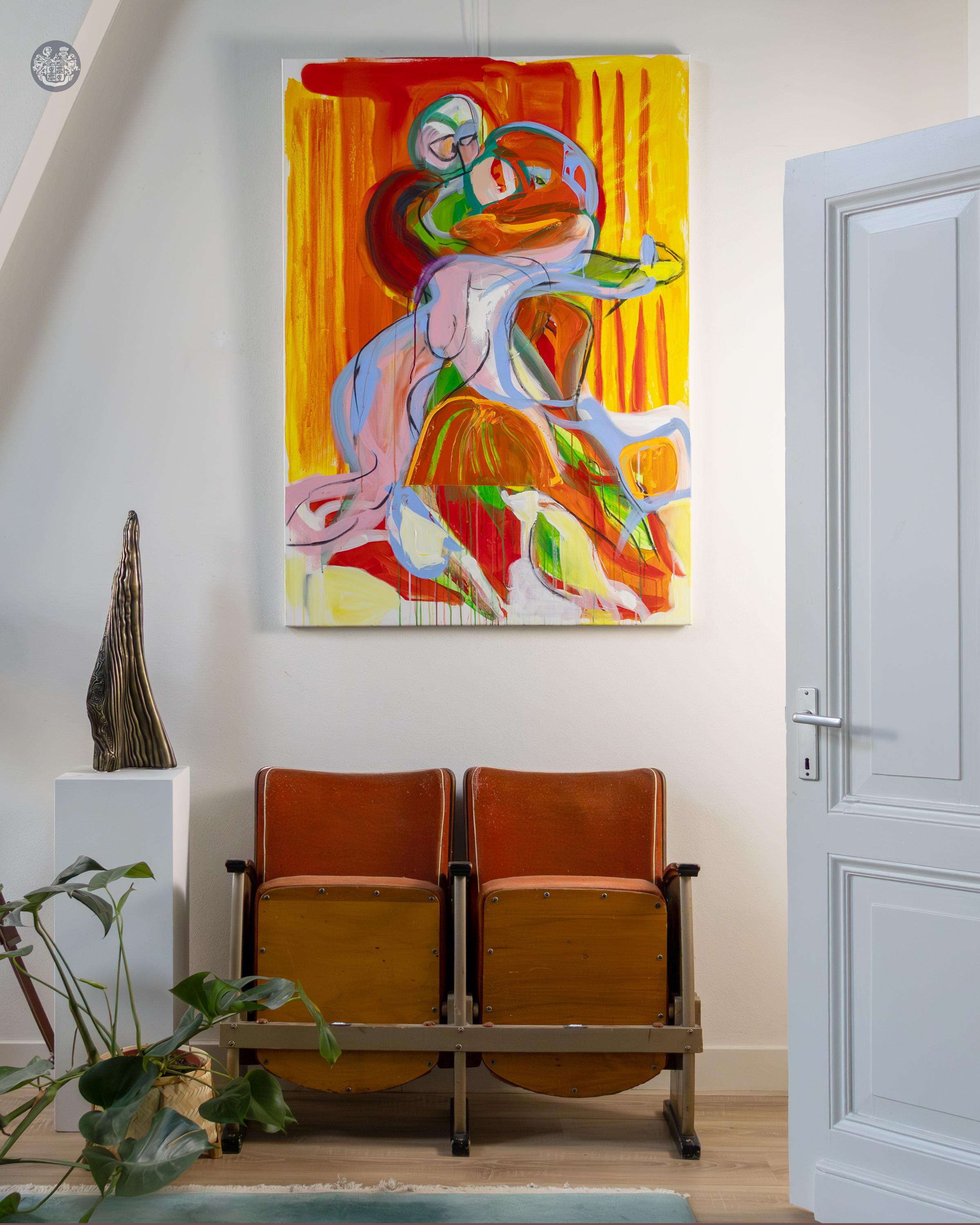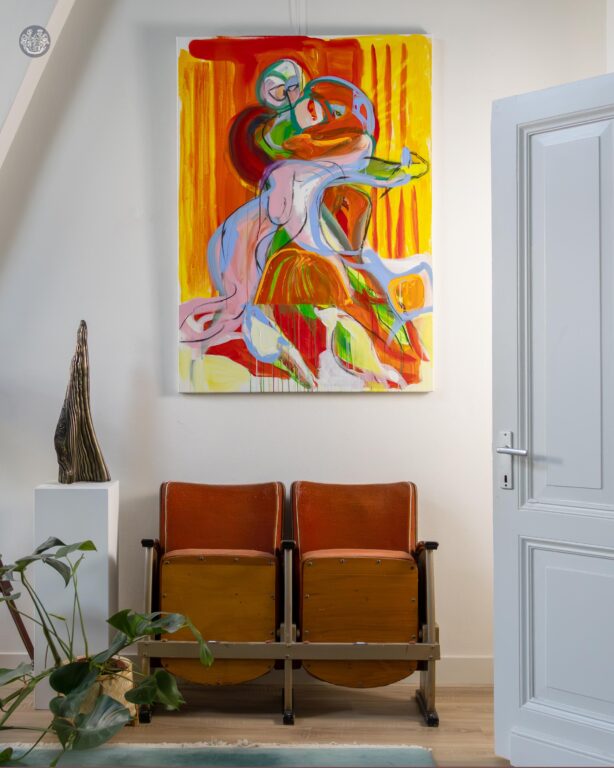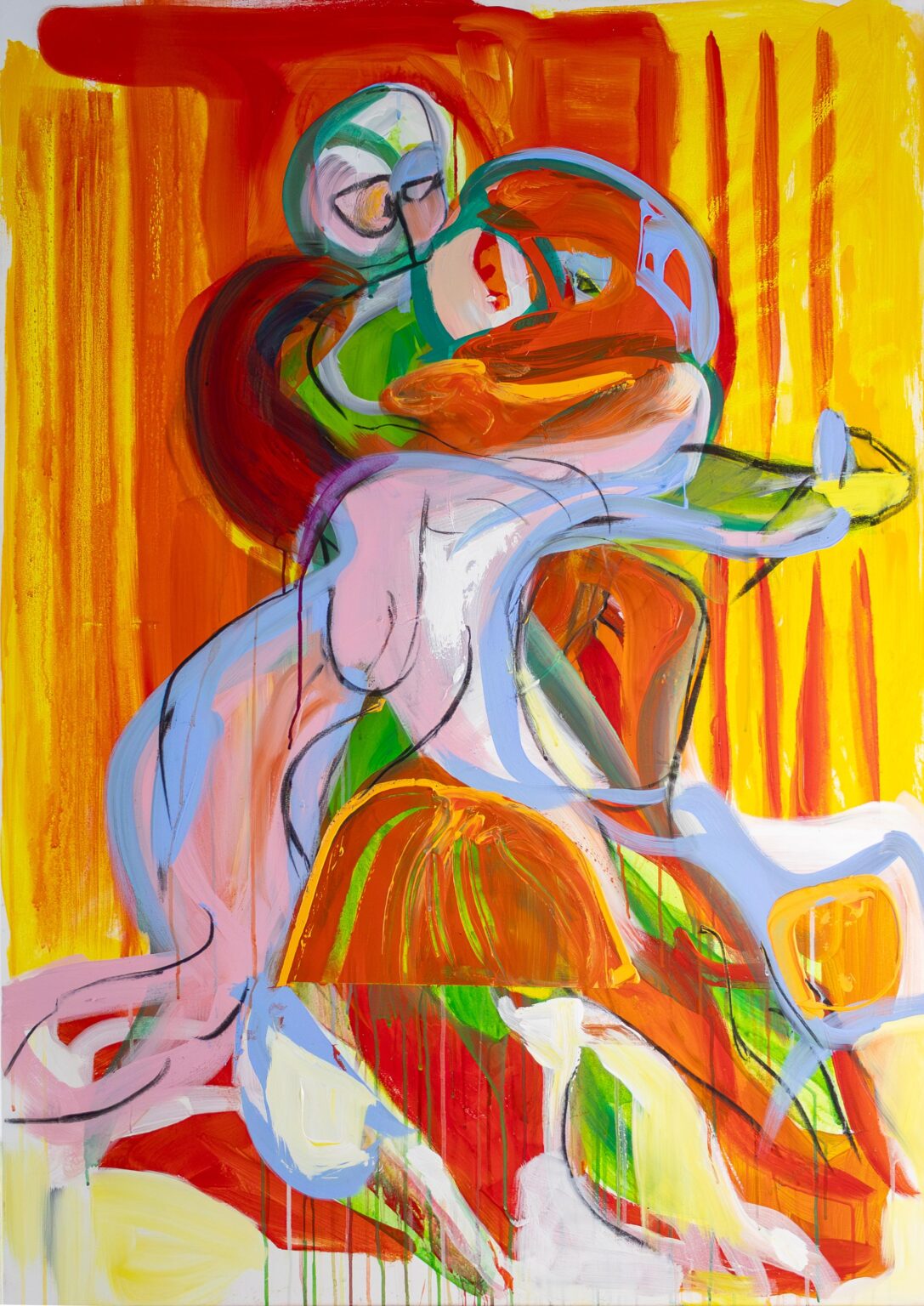
Dick Berckenkamp’s Composition IV (Let’s dance) from the Composition series appears as a visceral interface of form and kinetic energy, in which the boundaries of the human figure are destabilized by bold, expressionistic brushstrokes. The silhouette of a female figure at the center does not seem isolated but appears entwined in movement, as if the presence of a second figure is suggested in the dance. This fleeting encounter is captured in a state of high speed, making the bodies appear simultaneously sculptural and ephemeral. The work thus evokes a scenario in which the physical form loses its usual closure and transitions into a state between anatomical presence and pure, rhythmic flow.
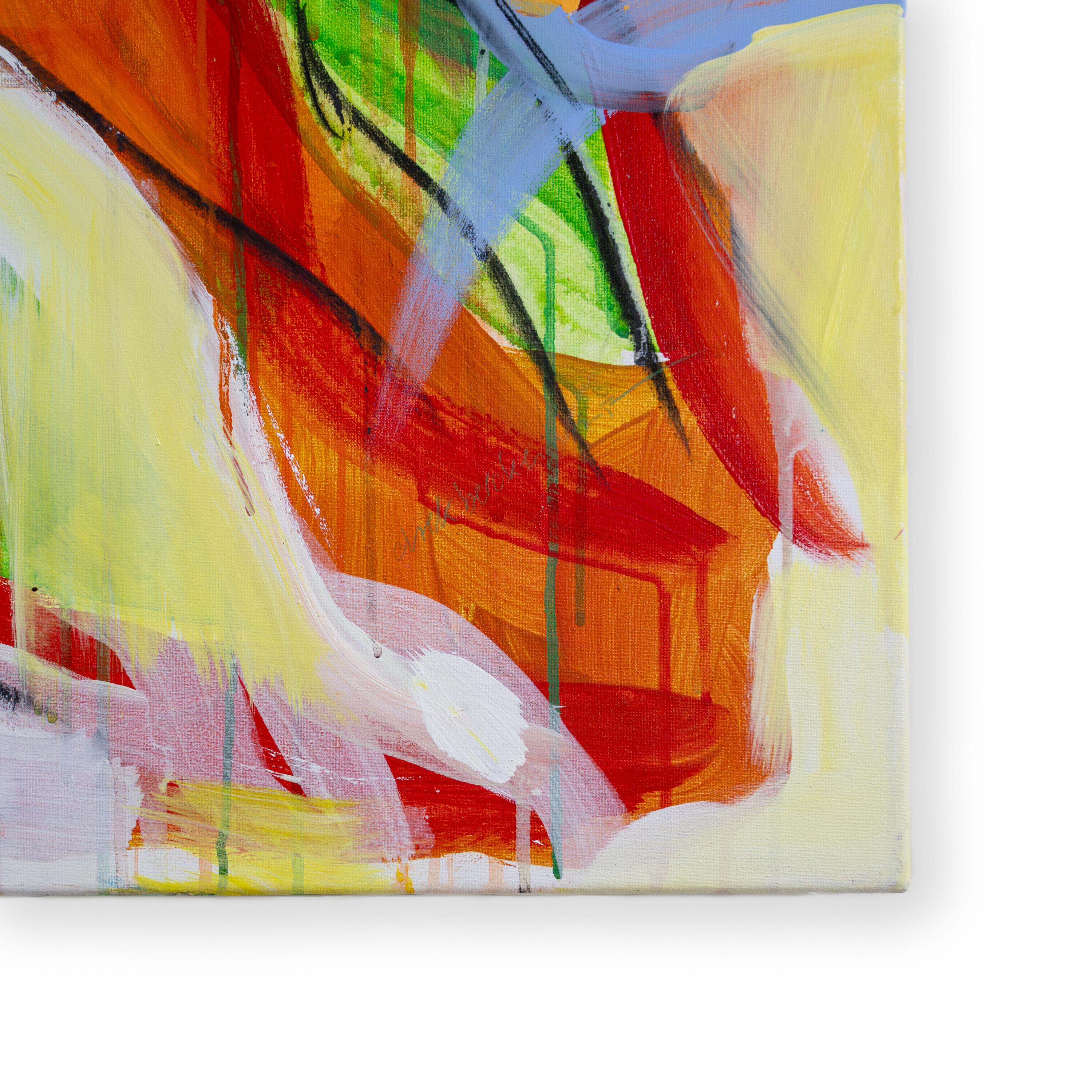
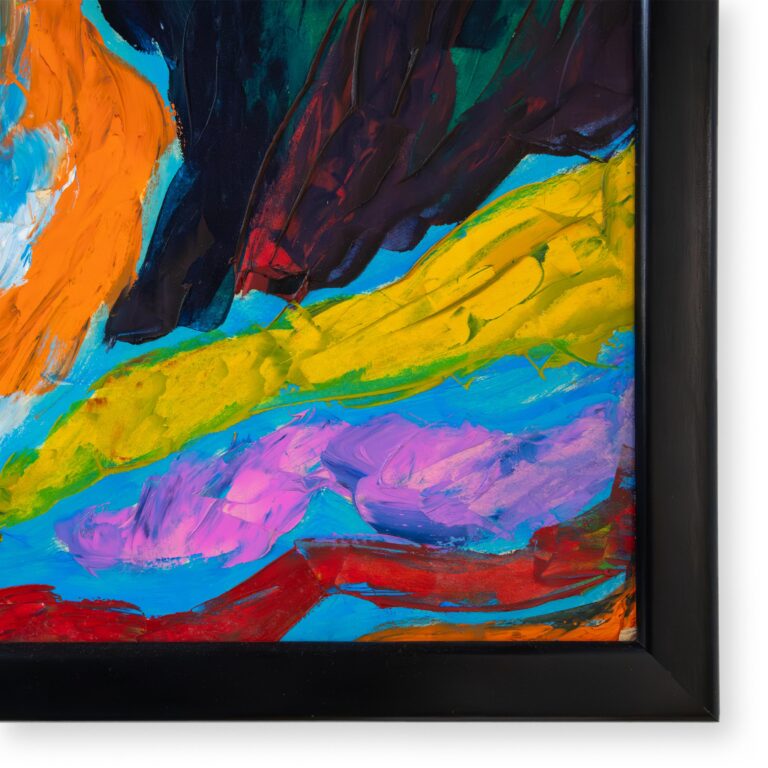
Although the composition is fixed in acrylic, it unfolds a powerful suggestion of dynamics: vibrant areas of ochre, crimson, and sky blue collide, while the eye follows curved, calligraphic contour lines that seem to be in a state of constant transformation. The entwined representation of the figures also brings to mind Futurist principles, where the layering of forms serves to capture pure kinetic energy and the flow of a movement in space. The title Let’s dance becomes here an invitation to understand the dissolution of the individual form within a shared rhythm.
A significant historical comparison can be drawn to the paintings of Francis Bacon: here, too, the figure is often isolated within an implied architectural interior and subjected to a formal distortion that reveals an inner, psychological truth. While the juxtaposition with Bacon emphasizes psychological depth, the depiction of movement sequences recalls Futurist concepts in which the dynamics of the body penetrate space, making time simultaneously experienceable in the form of color and line. Berckenkamp achieves an intensity here that, instead of existential dread, conveys a sense of liberation, fusion, and vital impulse. In both cases, the body becomes the medium for a movement that is both physical and psychological—a tension between the acting figures and the space they inhabit.
The vibrant, layered background reinforces the impression of an environment charged with energy, heat, and sound, as if the surrounding space had become soft and flexible, vibrating in harmony with the dancing couple. This paradoxical effect combines recognizable forms with a biomorphic, almost organic deformation of space. The result is a work that defies any fixed classification: simultaneously figurative and abstract, intimate and expansive, familiar and strange. Composition IV (Let’s dance) thus becomes a poetic interruption that invites the viewer to discover the vitality of the human form when it is stripped of its stillness and redefined through the collective act of movement.